
 Gannon University
Erie, PA 16541
AI-Driven Security, and Zero-Trust Architectures
The ephemeral, stateless nature of serverless computing presents unprecedented challenges to traditional network security. Conventional perimeter-based defenses and rule-based IDS are ill-equipped to protect transient, event-driven functions lacking persistent state.
This research presents a Serverless Intelligent Firewall (SIF) combining LSTM-based deep learning intrusion detection with Zero-Trust Architecture (ZTA) enforcement for adaptive, real-time threat detection in cloud-native environments.
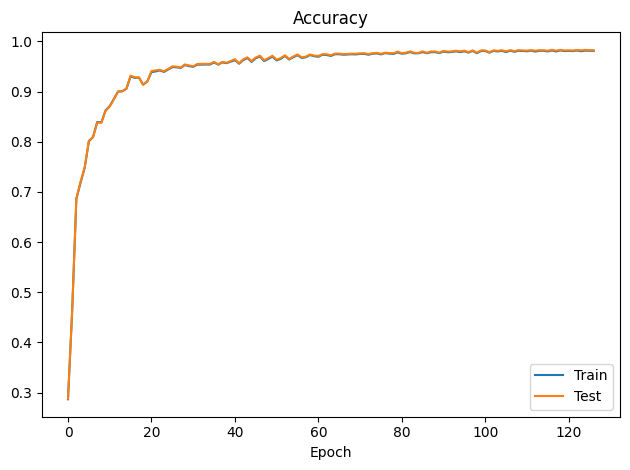
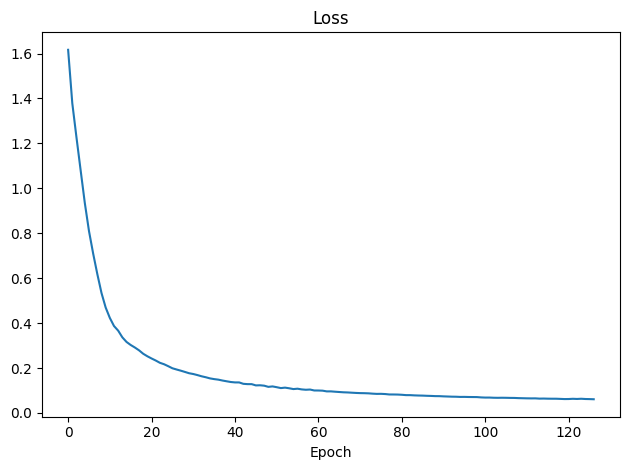
The 3-layer LSTM achieved 98% accuracy, precision, recall, and F1-score on CICIDS2017, outperforming SVM (88.4%), Decision Tree (90.2%), and CNN (93%).
Keywords: Serverless · LSTM · Zero-Trust · IDS · CICIDS2017 · AWS Lambda
- Design a deep learning IDS optimized for stateless serverless cloud environments
- Develop an LSTM architecture capturing temporal flow dependencies for coordinated attack detection
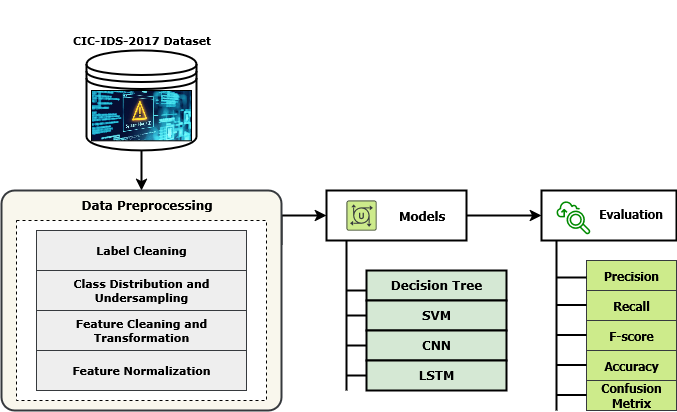
- Implement strategic undersampling to resolve class imbalance across 2.8M CICIDS2017 records
- Benchmark against SVM, Decision Tree, and CNN using standardized evaluation metrics
- Integrate NIST SP 800-207 Zero-Trust — continuous verification, least-privilege, breach assumption
- Deploy on AWS Lambda demonstrating <100 ms real-time inference latency
- RQ1: Can serverless architectures maintain <100 ms inference latency for real-time IDS?
- RQ2: Does LSTM provide superior accuracy over CNN/SVM/DT on CICIDS2017?
- RQ3: Can ZTA be integrated without significant operational overhead?
| Total Records | 2,830,540 flow records |
| Features | 78 numerical traffic features |
| Classes | BENIGN · DDoS · DoS · PortScan · Other |
| Balancing | Undersampled to 50,000 / class |
| Split | 80% train / 20% test (stratified) |
| LSTM Parameter | Value |
|---|---|
| Input features | 78 numerical flow features |
| Hidden units | 3 layers: 128 → 64 → 32 |
| Dropout | 0.3 after each LSTM layer |
| Optimizer / LR | Adam · 0.001 |
| Epochs / Patience | 120 epochs · Early stop = 10 |
| Lambda latency | <15 ms warm · <100 ms cold |
| Model | Prec. | Recall | F1 |
|---|---|---|---|
| SVM | 84.1% | 77.8% | 80.8% |
| Dec.Tree | 87.6% | 81.3% | 84.3% |
| CNN | 95.1% | 85.4% | 89.9% |
| LSTM | 98.0% | 98.0% | 98.0% |
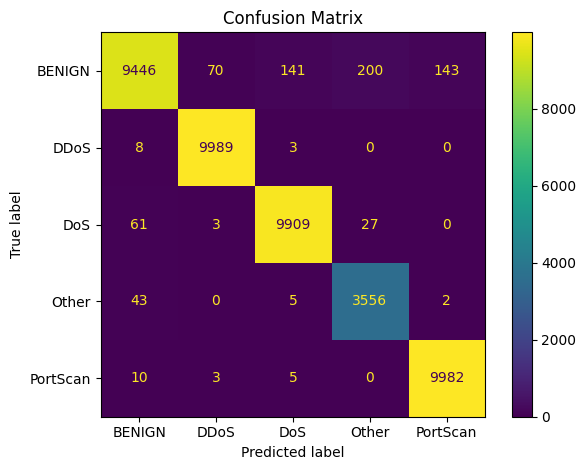
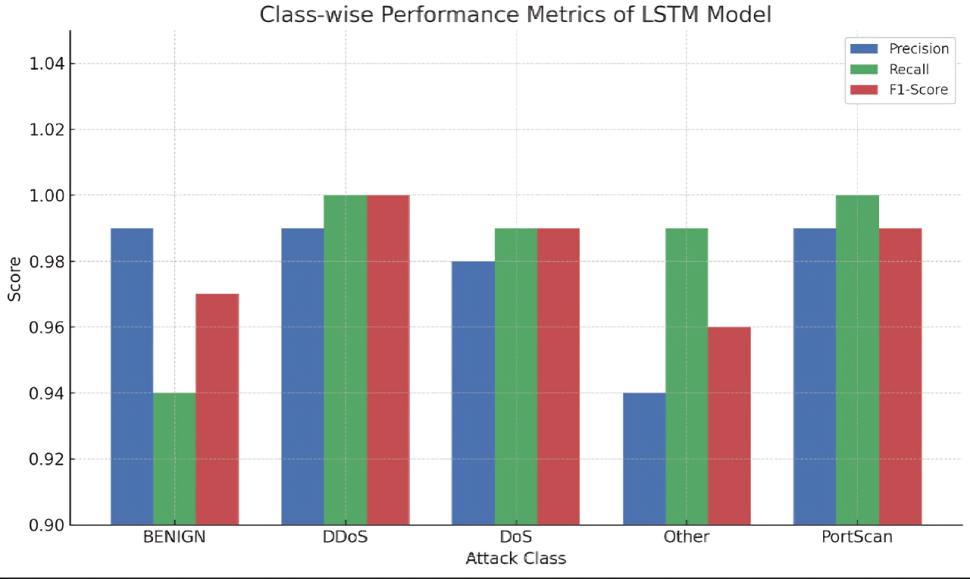
| Class | Precision | Recall | F1 | Correct/Total |
|---|---|---|---|---|
| BENIGN | 0.99 | 0.94 | 0.96 | 9,446 / ~10,000 |
| DDoS | 0.99 | 1.00 | 0.99 | 9,989 / 10,000 |
| DoS | 0.98 | 0.99 | 0.98 | 9,909 / ~10,000 |
| PortScan | 0.99 | 1.00 | 0.99 | 9,982 / 10,000 |
| Other | 0.94 | 0.99 | 0.96 | 3,556 / 3,606 |
| Macro Avg | 0.978 | 0.984 | 0.976 | — |
- Novel SIF Framework: First integration of LSTM-based IDS with serverless AWS Lambda deployment enforcing NIST SP 800-207 ZTA in a unified, production-viable architecture
- State-of-the-Art Accuracy: 98% across all metrics, surpassing federated IDS (97%), hybrid CNN-LSTM (95%), and all classical baselines
- Scalable & Zero-Cost Idle: Lambda scales to zero — eliminates persistent attack surfaces; cost-per-invocation model superior to always-on EC2
- Temporal Feature Exploitation: LSTM memory gates capture flow evolution patterns inaccessible to CNN convolutions or SVM kernels
- Sub-100ms Latency: 15 ms warm execution; 1.1 s cold-start via TorchScript + provisioned concurrency
- ZTA with Minimal Overhead: mTLS + IAM adds ~8 ms (5%) while providing per-flow continuous verification
- Open Reproducibility: Full code, trained model (.pth), Docker config, Lambda scripts on GitHub
- ► Identity: mTLS via AWS Cognito on every flow
- ► Classify: LSTM inference · confidence >0.85
- ► Policy: IAM least-privilege condition evaluation
- ► Enforce: ALLOW (BENIGN) / BLOCK + SNS alert
- ► Re-verify: Every 5 min or 500 flows
The SIF framework proves serverless + LSTM + ZTA are synergistic: serverless eliminates persistent attack surfaces; LSTM captures temporal threat patterns; ZTA converts ML predictions into auditable security decisions.
Future directions:
- Federated learning across multi-tenant environments
- Adversarial robustness evaluation & hardening
- Transformer-based traffic classifiers
- Encrypted TLS traffic analysis
- XAI (SHAP/LIME) for analyst dashboards
| Reference | Model | Accuracy |
|---|---|---|
| Proposed (2025) | 3-Layer LSTM | 98.0% |
| Neto et al. 2022 | Federated IDS | 97.0% |
| Bamber et al. 2025 | CNN-LSTM | 95.0% |
| Altunay et al. 2023 | CNN+LSTM | 93.2% |
- Sharafaldin et al. (2018). CICIDS2017. ICISSP
- Rose et al. (2020). NIST SP 800-207 Zero Trust Architecture
- Hochreiter & Schmidhuber (1997). LSTM. Neural Computation
- Altunay & Albayrak (2023). CNN+LSTM. ESTIJ
- Bamber et al. (2025). CNN-LSTM IDS. arXiv
- Kingma & Ba (2015). Adam Optimizer. ICLR
- AWS (2024). Lambda Developer Guide