
Publication Snapshot
IEEE COMPAS 2025 | Published October 23, 2025
Leveraging DenseNet and multi-scale information for enhanced digital forensics.
DGAF-Net fuses DenseNet121 semantic features, Gabor-driven texture evidence, and gated attention fusion to strengthen deepfake detection under compression, noise, and other real-world distortions that matter in management information systems.
Lead Researcher Profile
Deepfake detection, digital forensics, MIS trust, applied AI, and research-to-public artifact development. This portal highlights the lead author and connects every primary public profile for authorship verification, collaboration, and citation discovery.
Featured researcher for the DGAF-Net deepfake-detection study and the public research package.
Professional background, academic identity, and collaboration context.
linkedin.com/in/md-anisur-rahman-chowdhury-15862420aRepositories, research portals, implementation assets, and source visibility.
github.com/ANIS151993Publication and citation record for academic verification.
scholar.google.com/citations?user=NQyywPoAAAAJPersonal project hub and extended research showcase.
marcbd.siteResearch profile for academic networking and manuscript visibility.
researchgate.net/profile/Md-Anisur-Rahman-ChowdhuryWhy This Matters
In MIS settings, manipulated visual evidence can distort decision support, incident response, reputational management, and trust in operational data pipelines. The project frames deepfake detection as a practical digital-forensics requirement for modern information systems.
Visual misinformation can influence executive judgment, investigations, and downstream analytics.
The paper emphasizes realistic compressed media, reflecting how forged content circulates on social platforms and enterprise channels.
The proposed architecture aims to remain efficient enough for practical digital-forensics workflows rather than only benchmark-driven evaluation.
Workflow and Model
The research pipeline combines dataset curation, preprocessing, baseline benchmarking, and the DGAF-Net architecture that merges DenseNet features with Gabor-based texture evidence through a gated attention fusion mechanism.
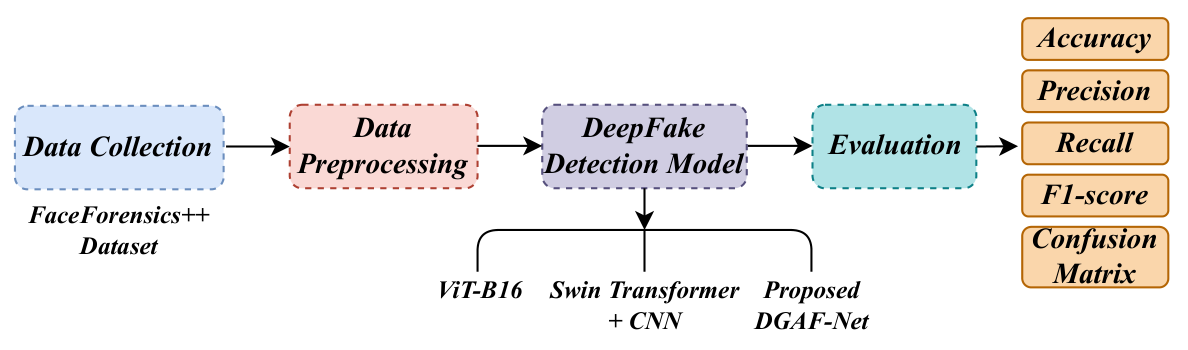
The paper workflow covers data collection, preprocessing, model comparison, and evaluation using accuracy, precision, recall, F1, and confusion analysis.
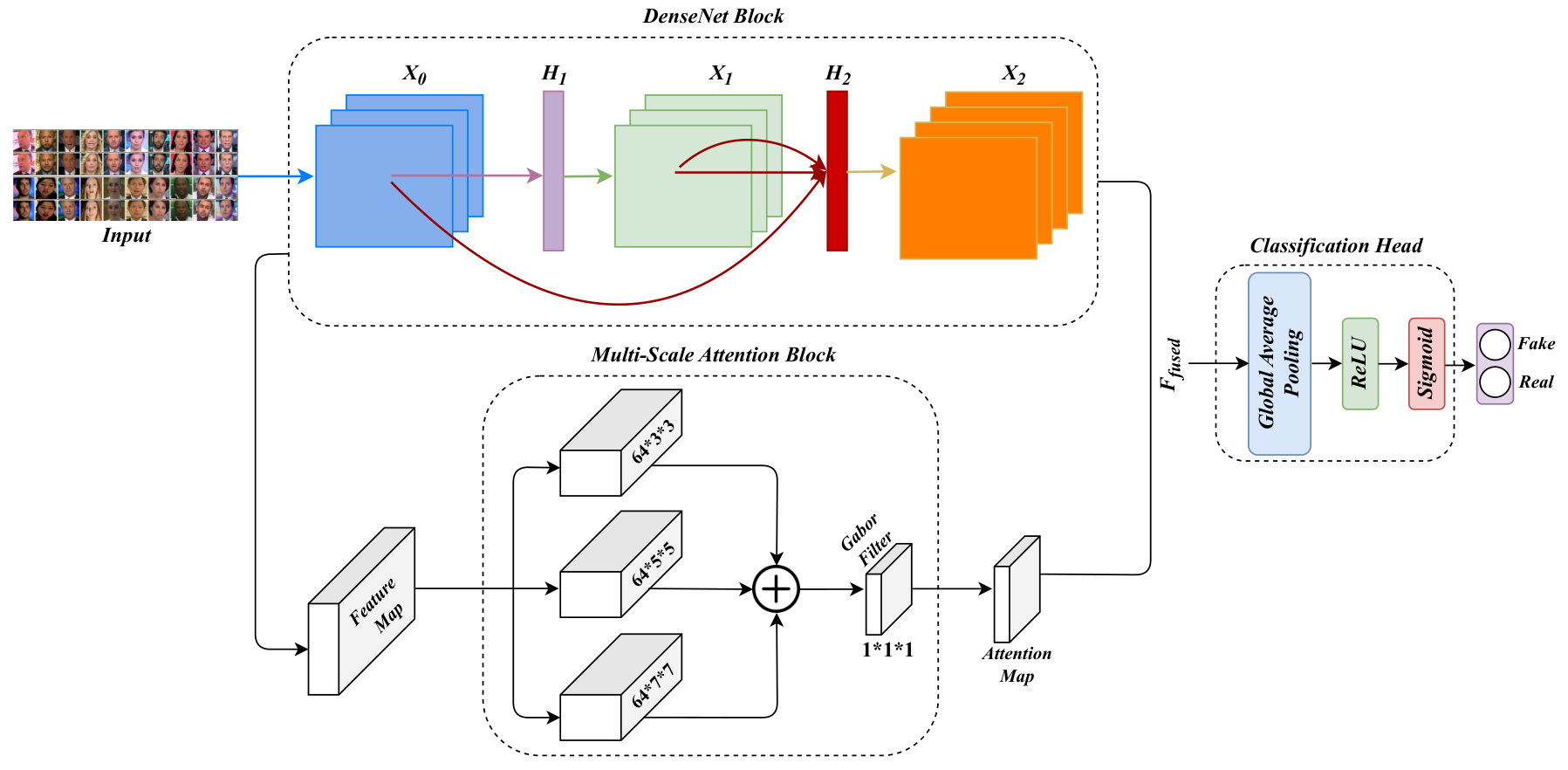
DenseNet121 contributes high-level semantic structure, while a multi-scale Gabor attention branch focuses on texture irregularities often associated with facial manipulation artifacts.
Dataset and Training
Only the settings explicitly described in the paper are presented here. The portal avoids inventing unreleased implementation details or unsupported dataset claims.
Results Snapshot
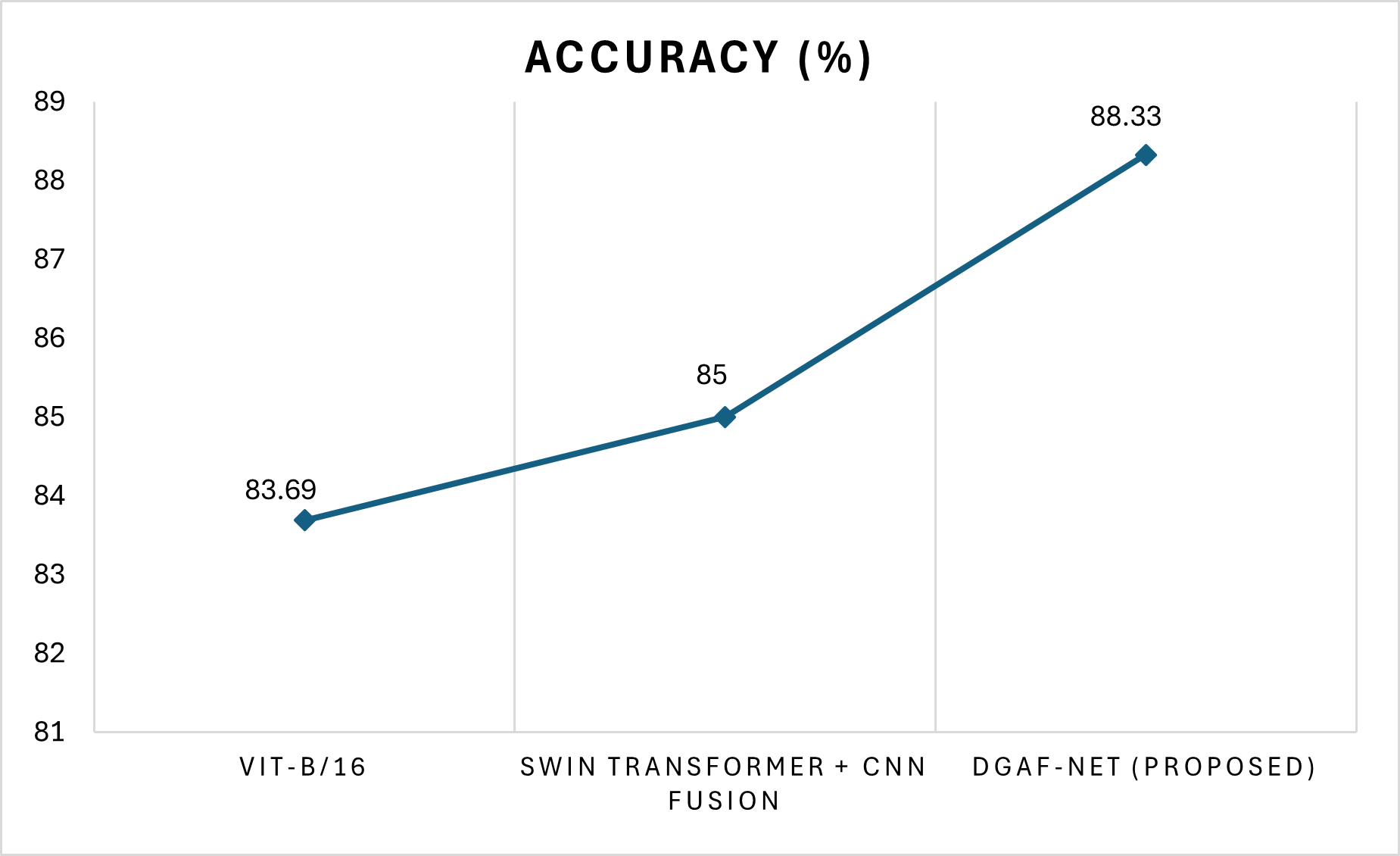
The site preserves the paper’s exact reported comparison values for ViT-B16, Swin Transformer plus CNN fusion, and the proposed DGAF-Net model.
| Model | Accuracy | Precision | Recall | F1-score | AUC |
|---|---|---|---|---|---|
| ViT-B16 | 83.69% | 84 / 83 | 85 / 82 | 84 / 83 | 0.84 |
| Swin + CNN | 85.00% | 83 / 88 | 91 / 78 | 87 / 82 | 0.86 |
| DGAF-Net | 88.33% | 88 / 88 | 91 / 85 | 90 / 87 | 0.88 |
Precision, recall, and F1 entries are shown as Real / Fake class values exactly as reported in the paper.
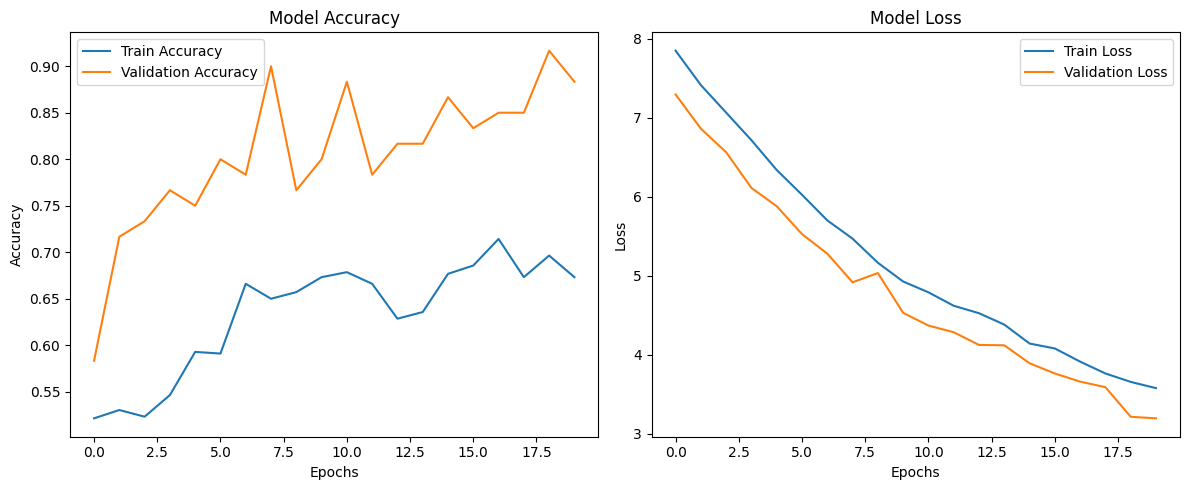
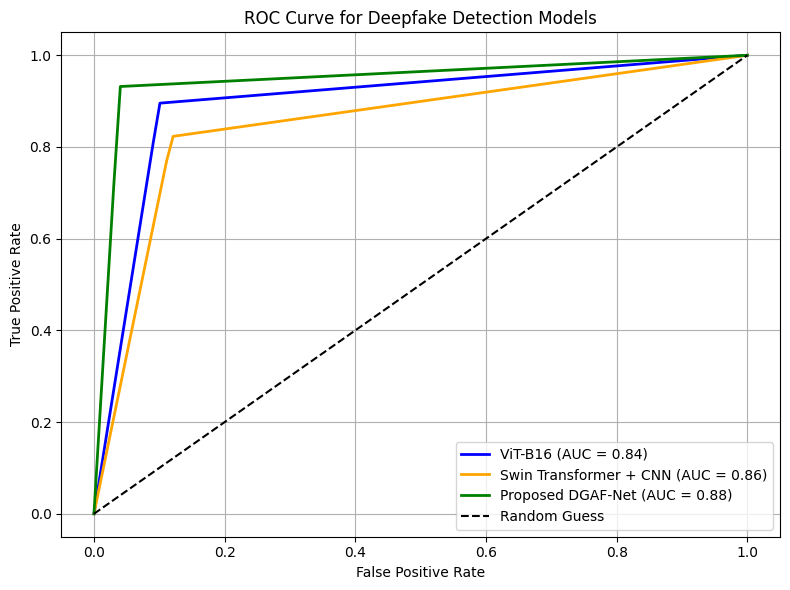
Analytics Dashboard
These visuals were generated for this repository from the verified metric table and dataset summary, then exported as static web assets for both GitHub and GitHub Pages.
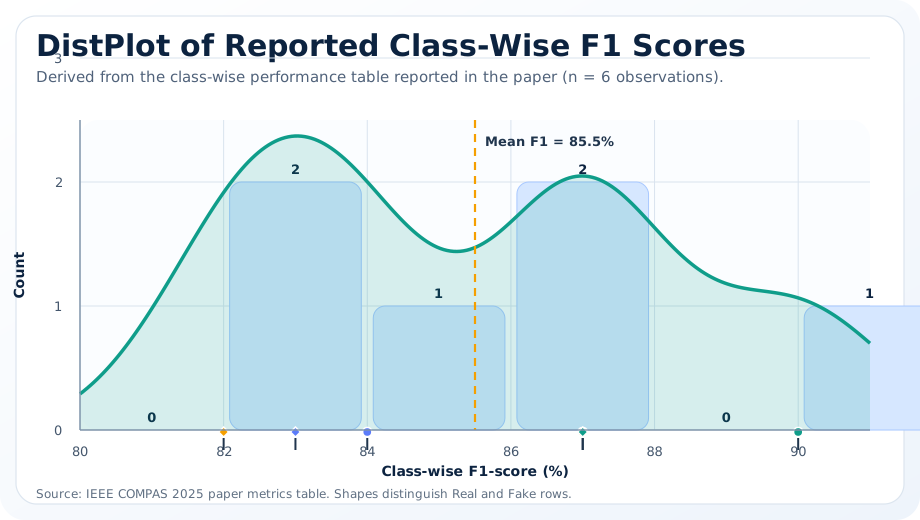
Distribution of the six reported class-wise F1 observations.
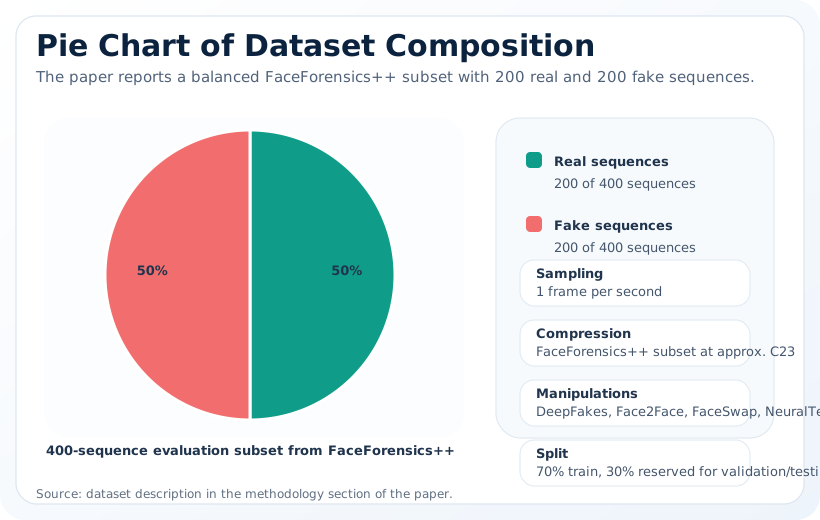
Balanced FaceForensics++ subset composition used by the study.
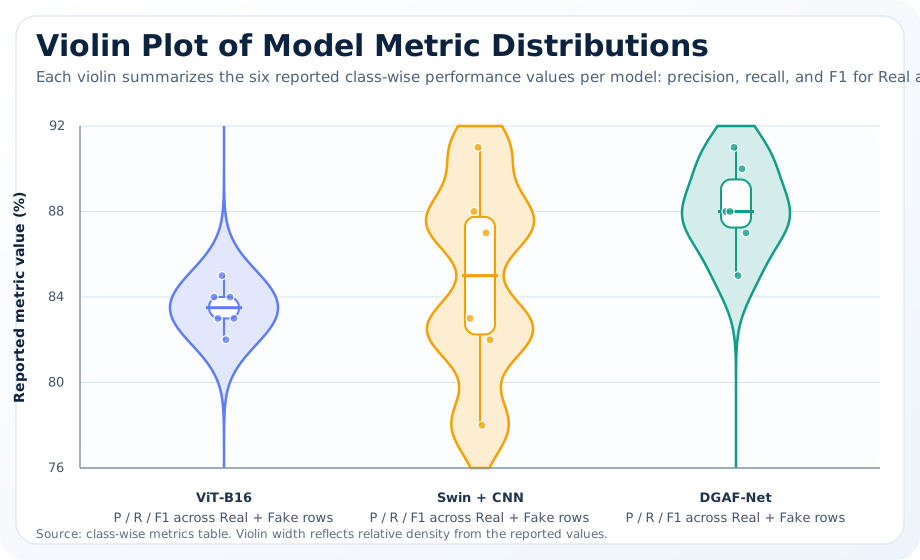
Per-model distribution of reported precision, recall, and F1 values.
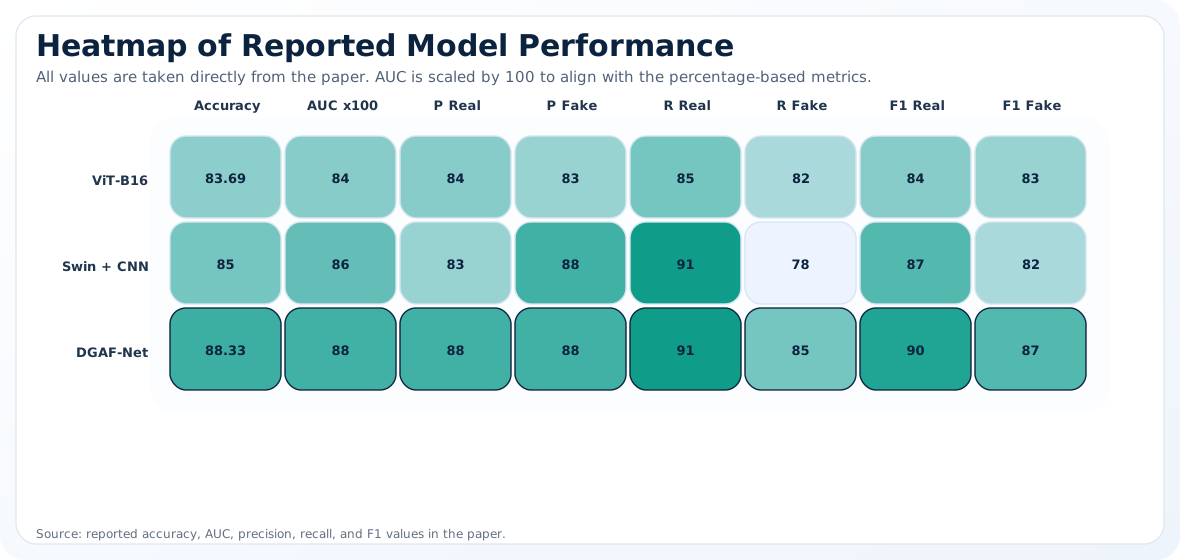
Performance matrix across accuracy, AUC, and class-wise metrics.
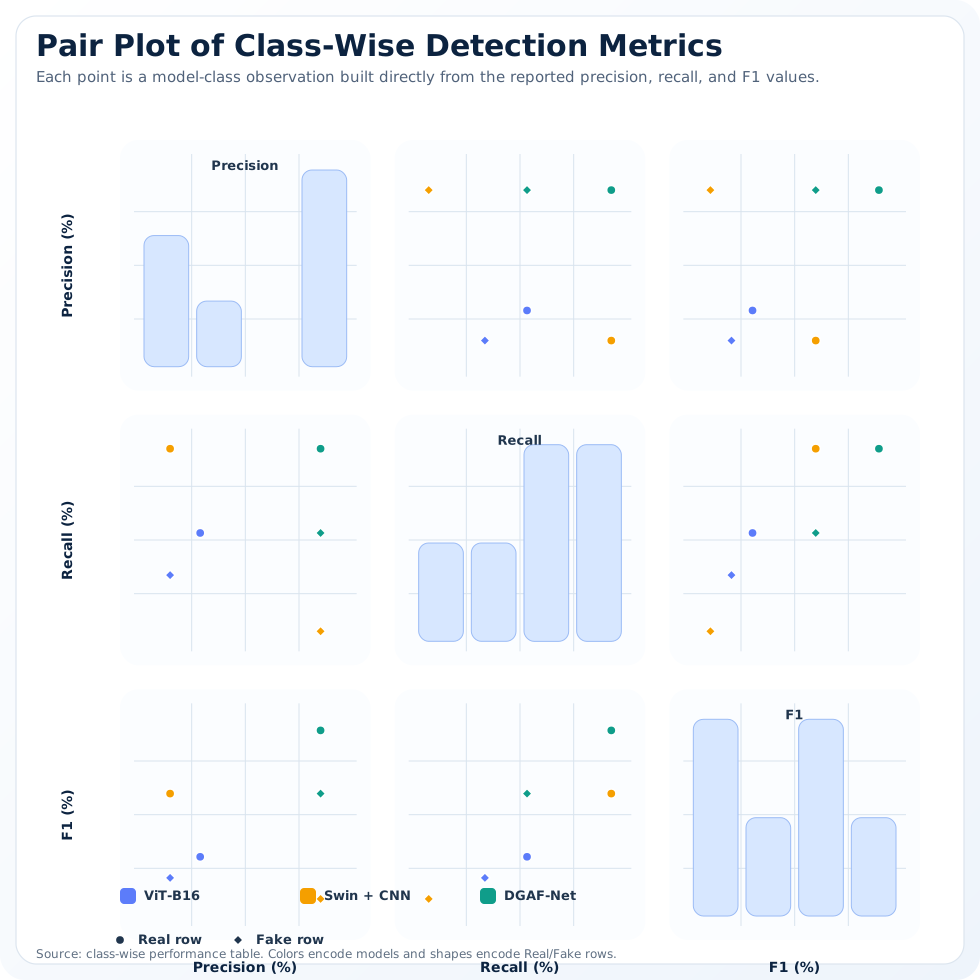
Precision, recall, and F1 relationships across model-class observations.
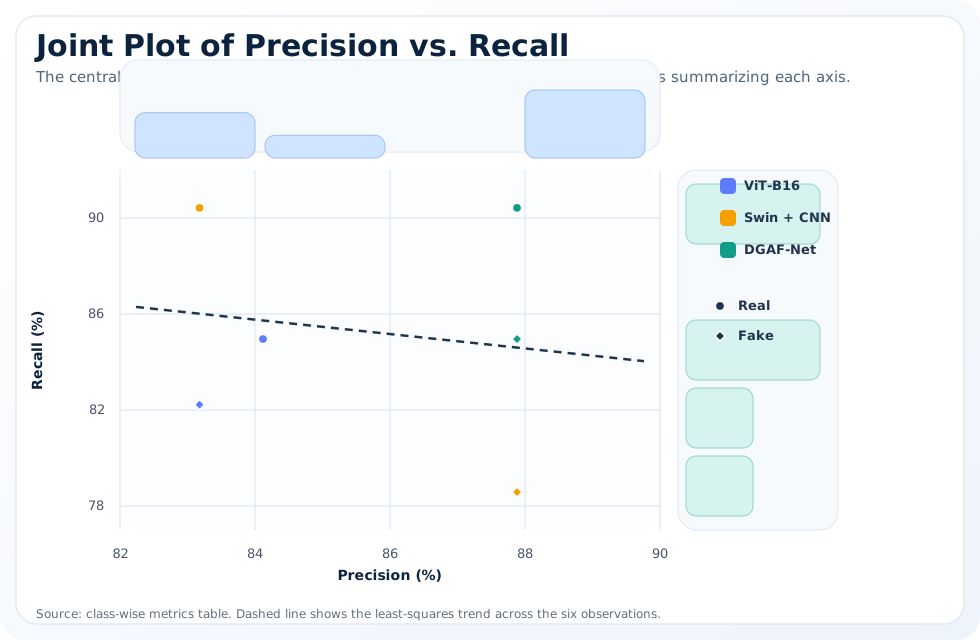
Precision versus recall with marginal histograms and a trend line.
Video Overview
The project video extends the paper with a quick-access explainer suitable for reviewers, collaborators, and visitors arriving from the repository or scholar profile.
Publication and Authors
This repository package is designed as a durable research artifact: publication-aware, link-rich, and clear about what is sourced directly from the paper.
@inproceedings{rahmanchowdhury2025deepfake,
  title     = {Deepfake Detection in MIS: Leveraging DenseNet and Multi-Scale Information for Enhanced Digital Forensics},
  author    = {Md Anisur Rahman Chowdhury and Khandakar Rabbi Ahmed and Shahriar Alam Robin and Shah Tawkir Nesar and Towfika Salam and Md. Naimul Ahsan and Md Eahia Ansari},
  booktitle = {2025 IEEE 2nd International Conference on Computing, Applications and Systems (COMPAS)},
  year      = {2025},
  month     = {October},
  day       = {23},
  url       = {https://ieeexplore.ieee.org/abstract/document/11381812}
}
Md Anisur Rahman Chowdhury, Khandakar Rabbi Ahmed, Shahriar Alam Robin, Shah Tawkir Nesar, Towfika Salam, Md. Naimul Ahsan, and Md Eahia Ansari.
The publication connects institutions in the United States and Bangladesh, reinforcing the project’s interdisciplinary positioning across digital forensics, MIS, and applied AI.
Document Security Policy
This portal follows the same public policy style as the follow-up GitHub research website: visitors first verify the author channels, then request access before opening the preserved document bundle.
Open the lead researcher's GitHub profile and project video, then confirm the checks in the gate.
Send a short email request so the author can verify academic, review, or collaboration purpose before sharing protected materials.
Email the AuthorComplete the access acknowledgements in the gate to open the published PDF preserved in this repository.
Secure Download Gate
Follow the public channels, request access by email, then acknowledge the steps before opening the published paper file.
Open Published Paper PDF